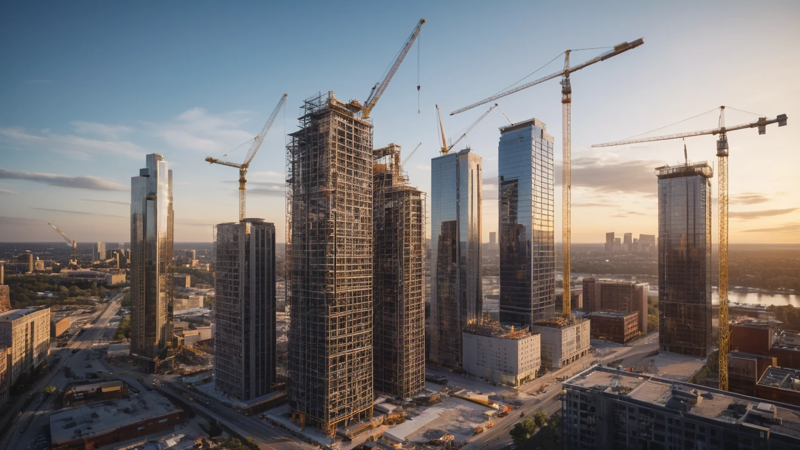
Real Estate Developer In The U.S. – Build Wealth & Communities With Confidence
Real estate developer in the U.S. – Discover what developers do, how they make money, and how to start your own successful real estate development journey.
A real estate developer in the U.S. buys land, finances construction, and oversees property projects from concept to completion. They transform land into profitable housing, retail, or commercial developments that shape cities and communities.
Real Estate Developer In The U.S.: How They Shape America’s Skyline ️
Have you ever looked at a stunning skyscraper or a cozy new neighborhood and wondered who made it happen? That’s the magic of a real estate developer — the visionary behind America’s ever-changing landscape.
In the U.S., real estate developers aren’t just building properties; they’re building the future. From luxury condos in Miami to tech campuses in Austin, these professionals connect finance, creativity, and strategy to create spaces people love.
Let’s dive into what real estate developers do, how they make money, and how you can become one too.
What Does A Real Estate Developer Do Exactly?
At its core, a real estate developer takes raw land or old properties and transforms them into profitable projects. They coordinate every stage — from market research and design to financing and construction.
Here’s what they typically handle:
- Land acquisition and zoning approvals
- Financing (through investors or lenders)
- Hiring architects and contractors
- Project management until completion
- Marketing and selling or leasing the finished property
In short, they’re part entrepreneur, part project manager, and part visionary.
Types Of Real Estate Developers In The U.S. ️
Real estate development covers a wide range of specialties. Let’s break them down:
| Type of Developer | Focus Area | Example Projects |
| Residential | Homes, condos, townhouses | New suburban communities |
| Commercial | Offices, retail spaces | Shopping centers, office towers |
| Industrial | Warehouses, logistics centers | Amazon fulfillment hubs |
| Mixed-Use | Combines residential + retail | Live-work-play communities |
| Land Developers | Raw land preparation | Subdivision layouts and utilities |
Each type requires different skills, financing strategies, and risk tolerance.
The Role Of A Developer In The Real Estate Cycle
Real estate developers play a unique role in the property life cycle — they’re the ones who turn ideas into assets.
- Concept Phase: Identifying opportunities and trends.
- Planning: Securing permits and creating architectural designs.
- Financing: Attracting investors or securing loans.
- Construction: Overseeing contractors and timelines.
- Sales or Leasing: Monetizing the finished project.
Without developers, land would stay underused, and communities wouldn’t grow.
How Real Estate Developers Make Money
Developers earn income by creating value. They buy properties at a low cost, enhance them, and sell or lease them for profit.
Here are common income streams:
- Project profits: Selling developed property at a higher price.
- Rents and leases: Earning ongoing cash flow.
- Development fees: Charging for managing a project.
- Equity appreciation: Holding properties long-term for value growth.
Pro tip: Developers who diversify — owning some properties and selling others — often achieve long-term stability.
Skills Every Successful Developer Needs
Becoming a successful developer requires a blend of hard and soft skills.
Key skills include:
- Financial literacy
- Market analysis and research
- Networking and negotiation
- Leadership and communication
- Problem-solving and adaptability
Developers must also understand zoning laws, construction methods, and economic trends.
Education And Career Path To Becoming A Developer
You don’t need a specific degree to become a real estate developer, but education helps.
| Education Level | Common Majors | Benefits |
| Bachelor’s | Real Estate, Finance, Architecture | Builds business foundation |
| Master’s | Real Estate Development (MRED), MBA | Expands leadership and finance knowledge |
| Certifications | CCIM, NAIOP courses | Boosts credibility and network |
Most developers start as real estate agents, brokers, or investors before launching their own projects.
Steps To Become A Real Estate Developer In The U.S.
Here’s a simple roadmap for aspiring developers:
- Get educated in real estate or finance.
- Work in the industry — gain experience in sales or construction.
- Build a network of investors, agents, and contractors.
- Start small — renovate homes or flip properties.
- Secure financing for bigger projects.
- Manage your first development project.
- Scale up by reinvesting profits into larger projects.
Remember: every major developer started with one small deal.
Financing Real Estate Development Projects
Securing funds is one of the toughest parts of the business. Developers often use a mix of financing sources:
| Financing Source | Description | Risk Level |
| Bank Loans | Traditional commercial loans | Medium |
| Private Investors | Equity partners sharing profits | Low–Medium |
| Crowdfunding | Online funding platforms | Medium |
| Self-Financing | Using personal capital | High |
Developers often combine debt and equity to minimize risk while maintaining control.
Why Real Estate Development Is So Profitable In The U.S.
The U.S. has one of the world’s most dynamic real estate markets. Growing populations, strong demand for housing, and urban renewal projects keep the development industry thriving.
According to U.S. Census data, over 1.4 million new housing units are built annually. Developers capitalize on this by spotting growth zones early — think Austin, Nashville, and Phoenix.
The secret? Location, timing, and smart financing.
Challenges Developers Face In The Modern Market ⚠️
Real estate development isn’t all glitz and glamour. It comes with big risks:
- Rising construction costs
- Complex zoning regulations
- Economic downturns
- Labor shortages
- Environmental compliance
But seasoned developers know how to mitigate risks — through feasibility studies, cost forecasting, and strategic partnerships.
Technology’s Impact On Real Estate Development
Modern developers are embracing technology more than ever.
Tools like:
- Drones for site surveys
- 3D modeling for design visualization
- AI and predictive analytics for market forecasting
- PropTech platforms for investor management
Tech makes development faster, more accurate, and more profitable.
Top U.S. Cities For Real Estate Development Growth ️
Here are the hottest U.S. markets where developers are thriving:
| City | Development Focus | Market Trend |
| Austin, TX | Tech campuses, apartments | Rapid growth |
| Miami, FL | Luxury condos | Booming demand |
| Phoenix, AZ | Residential expansion | Affordable housing surge |
| Charlotte, NC | Mixed-use projects | Strong population inflow |
| Denver, CO | Sustainable design | Eco-friendly development |
These cities offer affordable land, business-friendly policies, and growing populations — a developer’s dream combo.
Green And Sustainable Development
Sustainability isn’t a buzzword anymore — it’s a necessity.
Developers are going green by:
- Using energy-efficient materials
- Installing solar panels
- Designing walkable, transit-friendly communities
- Pursuing LEED certifications
Not only is this good for the planet , but it also appeals to eco-conscious buyers and investors.
Real Estate Developers vs. Real Estate Investors
While the terms sound similar, their roles differ.
Developers:
- Create and build new properties.
- Handle permits, design, and construction.
- Generate profits through project completion.
Investors:
- Buy existing properties.
- Focus on rental income or appreciation.
- Rely on developers for new supply.
Many professionals start as investors and later evolve into developers.
How To Build Your Own Real Estate Development Company
Starting your own firm means turning your passion into a business.
Follow these steps:
- Create a business plan outlining your goals and target market.
- Form an LLC or corporation for legal protection.
- Secure funding through investors or loans.
- Hire experts — project managers, architects, and legal advisors.
- Start with small projects to prove your capability.
Once you have a few successful developments, investors will come knocking.
The Future Of Real Estate Development In The U.S.
The next decade will bring massive shifts:
- Smart cities powered by AI and IoT
- Affordable housing innovation
- Modular and prefabricated construction
- Sustainable urban regeneration
Developers who adapt to tech and sustainability trends will lead the market.
Conclusion: Building More Than Just Property
A real estate developer in the U.S. is more than a builder — they’re a community creator, an innovator, and a wealth builder.
If you dream of leaving your mark on the skyline, this field offers unlimited potential. Start small, learn the business, and build your way up — brick by brick, deal by deal.
Your next project could shape the future of an entire neighborhood.
FAQs About Real Estate Developers In The U.S.
- What Does A Real Estate Developer Do In The U.S.?
They buy land, secure financing, manage construction, and oversee projects from concept to completion — turning ideas into profitable properties. - How Do Real Estate Developers Make Money?
They earn profits by selling or leasing completed properties, collecting rents, and charging development or management fees. - What Education Is Needed To Be A Developer?
A degree in real estate, finance, or business helps, but experience in construction or investing is equally valuable. - How Risky Is Real Estate Development?
It’s high-risk but high-reward. Smart developers manage risks with feasibility studies, partnerships, and detailed planning. - What Are The Best U.S. Cities For Developers?
Austin, Miami, Phoenix, Charlotte, and Denver are among the top growth markets for developers right now.